Demolition Attachments Explained: Shears, Processors, Pulverizers and Grapples
A plain-English guide to the main excavator demolition attachments, what each one does best, and how to choose.
Modern demolition is less about knocking things down and more about processing material on site: separating concrete from steel, downsizing it for trucks and crushers, and sorting it for recycling. The right excavator attachment can make a demolition job dramatically faster and more profitable. Here's what each major tool does.
Demolition grapples
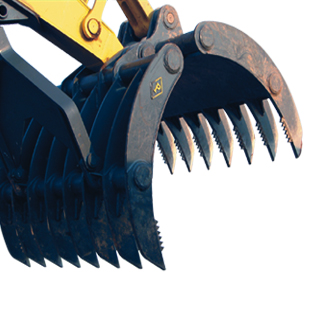
A demolition grapple is the workhorse of any C&D job. It picks up, sorts and loads debris, pulls apart light structures and cleans up the site. Look for heavy boxed tines, hardened pins and bushings, and rotation if you'll be sorting material or loading trucks precisely.
Best for: sorting, loading, light pulling and cleanup.
Mobile shears
Shears cut steel beams, pipe, rebar, tanks and scrap. Cutting with a shear is faster and safer than torch cutting, and it keeps workers out of harm's way.
- Stick (bucket linkage) shears mount in place of the bucket and run off the bucket cylinder, so they need no extra hydraulics. They are a lower cost option for downsizing tubing, beams and pipe.
- Hydraulic rotating shears have their own cylinders and 360° rotation for heavier structural steel and scrap processing.
Best for: structural steel, pipe, tanks and scrap.
Pulverizers and material densifiers
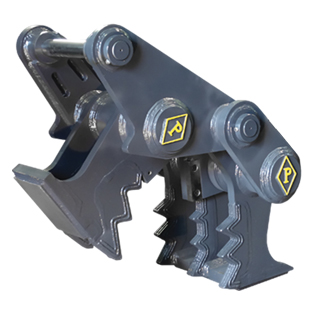
Pulverizers (also called densifiers or crushers) crush concrete and free the rebar inside it. They downsize slabs, pilings, precast pieces and pipe so the material can be loaded, crushed and recycled.
Best for: concrete demolition and recycling.
Multi-processors
A demolition processor is a hydraulic body that accepts interchangeable jaw sets: pulverizer, crusher, shear and tank-cutter jaws. One processor can handle several jobs, which makes it attractive for contractors with varied work. The trade-off is jaw change time and the cost of the extra jaws.
Best for: contractors who switch between concrete and steel frequently.
Hydraulic hammers
Hammers (breakers) break solid concrete and rock by impact. They are essential for foundations, thick slabs and reinforced structures that a pulverizer can't bite into.
Best for: thick, solid concrete and rock.
How to choose
- Start with the material. Mostly steel? Shear. Mostly concrete? Pulverizer or hammer. Mixed? A processor or a combination.
- Match the carrier. Every attachment is sized to an excavator weight class. Check hydraulic flow and pressure requirements too.
- Check the mounting. Pin-on, coupler, or a shared bracket system. Some manufacturers, including Pemberton, use one bracket across grapples, shears and densifiers, which can save money.
- Plan for wear parts. Blades, teeth and tips are consumables. Make sure replacements are available.
Buying used demolition attachments
Demolition tools live a hard life. On a used unit, inspect blades and teeth, the main pivot and bushings, cylinder seals, rotation (if equipped) and any welded repairs. Ask for service history whenever possible.
Shop demolition attachments
Browse excavator shears, demolition processors and excavator grapples for sale on Attachment One, or explore demolition tools from Pemberton.