How to Size a Wheel Loader Bucket for Your Material
The right loader bucket depends less on the machine and more on what you're moving. Here's a simple way to match bucket size to material density.
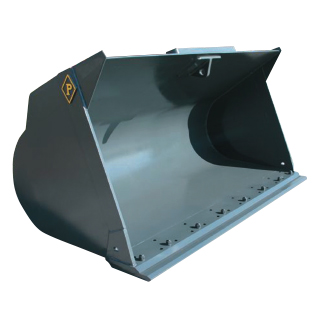
Ask ten operators what size bucket a loader should run and you'll get ten answers, because the right answer depends mostly on what you're moving. A bucket that's perfect for gravel is far too small for wood chips and far too big for shot rock. Here's a practical way to size a wheel loader bucket.
Start with your loader's rated operating capacity
Every wheel loader has a rated operating capacity (or rated payload) published by the manufacturer. That number is your ceiling. A loaded bucket should stay within it, including the weight of the bucket itself, or you risk poor stability, accelerated wear on the lift arms and tires, and safety problems.
Then think about material density
Materials vary enormously in weight per cubic yard. As a rough guide:
- Light materials such as wood chips, mulch, compost, snow and some grains are much lighter than soil.
- Medium materials such as topsoil, dry dirt, sand and gravel fall in the middle.
- Heavy materials such as wet clay, shot rock, iron ore and slag are the heaviest.
Densities vary with moisture and compaction, so check figures for your specific material before you buy.
The basic sizing math
- Find your loader's rated operating capacity in pounds.
- Find the weight of your material per cubic yard.
- Divide capacity by material weight to get the maximum heaped bucket size in cubic yards.
- Leave some margin for wet or compacted material.
Example: if a loader is rated for 10,000 lbs and your material weighs about 2,500 lbs per cubic yard, the loader can carry about 4 cubic yards per pass. If you switch to a light material that weighs a third as much, the same loader could carry a bucket roughly three times larger.
That's why light material buckets look oversized: they are sized so the loader works at full capacity on every pass.
Why a bigger bucket pays off
Running a small factory bucket on light material means you pay the operator, fuel and machine hours for a full day while moving a fraction of the material you could. Even half a yard more per pass adds up to a big difference over a season.
Match the bucket type to the job
- General purpose buckets for dirt, gravel and aggregates.
- Light material buckets for chips, mulch, snow and compost.
- Rock buckets, often spade-nosed, for shot rock and quarry faces. They are heavier, so capacity is smaller.
- Multi-purpose (4-in-1) buckets to clam, doze, grab and load with one tool.
- Side dump buckets for tight spaces, tunnels and trench work.
- Roll-out buckets for added dump height when loading tall trucks or hoppers.
- Grapple and trash buckets for bulky waste and storm debris.
Don't forget the hookup
Confirm whether the bucket is pin-on or fits your coupler (JRB, ACS, Volvo, CAT style and others). A great bucket that doesn't fit your coupler isn't a bargain.
Shop loader buckets
Browse wheel loader buckets for sale on Attachment One, and see Pemberton's line of general purpose, light material, rock and specialty loader buckets.